Showing posts with label first grade. Show all posts

Place Value Teaching Tens and Ones

Place value Teaching Tens and Ones is usually one of the first place value lessons you teach in kindergarten and first grade to introduce place value, so I love to make it a fun one! And what is more fun than ice cream to learn base 10 blocks, tens and ones, expanded form, and number words?? 
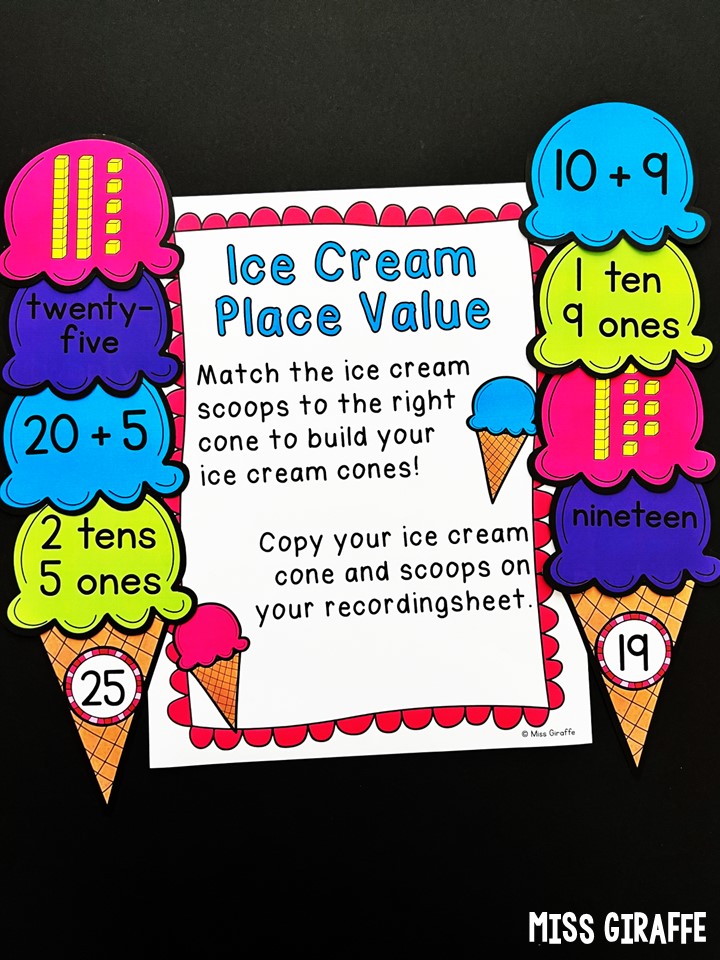
Place value ice cream cones center is such a fun lesson for teaching tens and ones, base 10 blocks, expanded form, and number words all in one consolidated activity! Great for first grade and kindergarten math time


For this lesson, you give students 4-5 cones with a number on them and then they build their ice cream cones by adding the matching scoops. You can easily make it harder or easier by which scoops you choose for them to build with and how many. You could do simply 1 scoop per cone to learn number words, 2 scoops to learn tens and ones and base 10, 3 scoops to add in expanded form, or any combination!

Ice cream place value game that is so cute and fun for first grade or kindergarten math

The first full set for this center is teen numbers only (numbers under 20) so they can first practice in a super easy way. I would also recommend only doing 2 scoops at first (base 10 and tens/ones) and doing only teen numbers. Then the next week, do the same center (or small group activity or however you use this) but with any 2 digit number under 50. You can also mix the 2 sets to make a 3rd review center.


What I love most about this place value lesson is how easily you can differentiate so all of your students can get practice at their level and feel successful, while all doing the same activity. The amount of numbers you practice at a time, the number of scoops you choose, and which ones, are all ways to level this center up or down to meet the needs of each of your kids. The recording sheets come in 2, 3, and 4 scoop options to make this super easy.

Place value base 10 blocks, tens and ones, and expanded form is made so easy with these fun math ice cream puzzles

They also have an example to follow, with the first scoop done for them, so the kids can be self directed and know what a completed ice cream is supposed to look like :) I put all 4 scoops for this picture example to show all the possibilities, but if you were using this green recording sheet with 3 scoops, you’d only have them be matching 3 scoops per cone, so I’d take out the number words option, for example, for each number if I was using this sheet.

Also another fun tip is to print the recording sheet on color paper like this! Slip it in a sheet protector and let them write their answers on it using a dry erase marker for extra fun! If it’s just a center and you don’t care about them turning work in, that’s an easy way to make this more engaging.


How to teach place value tens and ones lessons in a fun way

 As you can see, the scoop options for each number cone are:

* Number words (twenty-five)

* Base 10 blocks to represent the number

* Tens and Ones (2 tens 5 ones)

* Expanded form (20 + 5)


Tens and ones worksheets games and centers for kids to play to learn place value


But the recording sheets (which are optional) are also differentiated so they can show their answers with 2 scoops, 3 scoops, or 4 scoops. What I love, too, is you can reuse this center to teach each part. So you could do it with the cones and only tens and ones. Then later do it with tens and ones AND base 10. Then later add in expanded form and just keep adding a scoop :) Or do 2 at a time but a different 2 scoop types each time.


My favorite way to use these is to use the cones and the number words only (1 scoop per cone) in the beginning of the year - for simple number words practice and to teach them HOW to do the activity. Then later, when teaching place value, do 3 scoops of base 10, tens and ones, and expanded form. (For kids who struggle, remove the expanded form at first and add it later.) But all of the ways to differentiate make it a perfect (and fun!) activity that all of your kids can feel successful practicing place value skills with. Making sure they LOVE math time is actually more important than them getting the skills right away. If they keep loving math, they’ll keep working to learn the skills so math should always feel fun and like an exciting puzzle to solve whenever possible.


Speaking of puzzles, you know I love puzzles! These puzzles are another super easy and fun way to practice tens and ones.

Place value puzzles to learn tens and ones and base ten blocks representations of 2 digit numbers for lots of great math practice!


Have kids simply match the number to the base 10 blocks representation and how many tens and ones it has. Super simple but effective practice! Just like with the ice cream cones, I have a teen numbers only version of the center. This is perfect to do first with your lower groups, or just first in general, or if you’re teaching kindergarten and only doing teen numbers. :)

Teen numbers place value practice with games and worksheets


Another thing you can do (as seen above) is have the kids build the numbers with blocks. If you don’t have place value blocks, math cubes work perfect! There’s a link to the exact ones I use in the right sidebar of this page if you need some. You’re going to have kids who learn by building, just like you have visual learners, or kids who learn by listening, or kids who learn by writing, so you want to try to provide something for all of them to help ALL of your kids get it in the way that makes the most sense to them.


You can do this for any place value activity, including the ice cream cones. Just have them build the number in blocks (have ten blocks already formed with 10 cubes linked and they stay that way) next to it. Even while completing a simple place value worksheet, they can build their numbers/answers next to it. Letting them manipulate blocks helps them deepen their understanding, and also helps fidgety kids channel their energy in a way that’s connected to the lesson.

Teen numbers practice with tens and ones, place value blocks, and expanded form to learn ways to make numbers


Another way some kids love to learn is by coloring. Coloring is a hugely impactful learning tool when used educationally!


Place value coloring worksheets to write tens and ones in fun easy way

For this simple worksheet activity, let them use markers or crayons (I prefer skinny markers for this) to color in the base 10 blocks to represent the number then write how many tens and ones the number has. This is an excellent way to get in tens and ones practice in a very visual and kinesthetic way.


This particular worksheet is from the Groups of Ten section of my big Place Value Math Unit (that all of these activities I am showing are included in), but I have these worksheets in a lot of levels and options for tons of place value practice. The versions inside the unit, where it looks like this but is only 1 number per page, were so popular that I kept getting requests to make them for more numbers. So I made a separate pack of all numbers 1-120 so you could do 1 page a day as an easy Number of the Day morning work activity to do a little place value practice with a new random number each day. It’s a fun little warm up to get in a little base 10 blocks and tens and ones practice each day :)


Speaking of Base 10 blocks, these simple little center cards are my favorite way to introduce and practice base ten.

Place value blocks activities to learn numbers in fun ways


You can never get enough place value blocks practice so why not make it colorful? :) For this center, you cut out these cards and mix them up and lay them out. Kids simply pick a card, figure out the number the blocks represent (and build it themselves if you want), and then write it on their recording sheet next to the matching center. Boom! So easy.

Place value games and centers for first grade or kindergarten

All of the centers, games, and activities in my math units come with student friendly directions like this so they’re so easy to pull out and play. They also always come with teacher/homeschooler directions that are more in depth of how to prep and set it up, ways to make it harder/easier, fun ideas, or anything I felt would be helpful.


Another fun game to teach tens and ones is Place Value Roll! They roll the (included) dice to see how many tens blocks it has and how many ones blocks it has.

Fun place value games for math time that kids can play independently, with a partner, or in small groups lessons

What I love most about this activity is it is a sneaky way to consolidate the 2 separate skills of looking at base 10 blocks to know how many tens and ones a number has AND the ability to know what the actual number is. It sets it up in a vertical way where they see how writing how many tens and ones is actually simply writing the number. 4 tens and 2 ones is 42. (This activity is also a great bridge to teaching and learning the value of digits, which I'll write a post about later)


It’s also an easy game for them to play independently over and over but get different numbers so this could stay in your centers buckets for weeks! It's also a great activity to throw in your fast finishers bucket for kids who finish their work early to have another thing to choose from.


One way to make Place Value Roll a fun partner game is to have each partner have their own recording sheet but share dice. They take turns rolling the dice to build a number. Whoever builds a bigger number for that roll/round circles their number. Whoever has the most circles wins! You can put the recording sheets in sheet protectors and give them dry erase markers so they can wipe and play again once they fill all the spots to make it an endless center. Remember when I said what’s better than ice cream? Endless centers.


For assessment, there are tons of worksheets to use in my place value unit, but I also love to use cut and paste worksheets as an informal assessment. They’re the best, in my opinion, because kids can move around their answers and really assess their own understanding too. I love that they're self-checking and kids see glue as permanent so they often take a moment to proofread, which is a valuable skill in itself.


They’re also just great straightforward practice.

Place value tens and ones worksheets for first grade or kindergarten math


As with everything, I differentiate these too :)

Teen numbers worksheets for tens and ones practice


One thing I’ve shown on my blog and on Facebook before is that you can make any cut and paste worksheet into a reusable center by simply using fastener tape so kids can stick the answers on and can pull them off to reset it to be played again. Laminate the papers, put little strips of fastener tape on the sheet and on the answers, and voila - instant "game" for any skill. Scroll to the red Fact Fluency sheets in my Fact Fluency in First Grade blost post if you want to see a picture example.

Tens and ones cut and paste worksheets to make place value fun and engaging


You can also just simply print on color paper to make it more colorful.

Fun place value worksheets to learn tens and ones

It just looks more fun in color, right?


I'm selective about what I print on color paper since it's more expensive but I love to use it occasionaly to spruce up a "boring" skill. 


Anyway, there are so many more activities I could show you for teaching tens and ones during your place value lessons but these are my favorite. I’ll try to write more for the other place value skills (expanded form, groups of ten, value of digits, and all that good stuff!) to show you more ideas & activities from my giant 

Place Value Math Unit

Giant place value math unit filled with worksheets, games, activities, and tips for teaching all the concepts to build number sense


 Everything you have seen in this blog post is from that unit! :) 


If you want to see more of what is inside the unit, I also wrote a big Place Value in First Grade blog post that shows more place value activities and ideas too!


You’re also more than welcome to join my free Facebook group for Teaching Math in First Grade if you want to get more tips and ideas for early elementary math! I LOVE sharing tips, ideas, and activities. It's also a great place to ask questions and learn from each other. Just make sure you answer all 3 questions to get approved to join the group. I also have a First Grade Phonics group and a couple others if you’re interested in phonics too!


One tip I’ve shared in the math group specifically for teaching tens and ones is to WRITE the numbers on a “ten” block and a “one” block. This allows kids to visually see exactly what you’re saying when you say “ten” – it is simply ten “ones” blocks grouped together to make counting faster.

Teacher hack for learning tens and ones - write numbers on place value blocks for an awesome math visual

This will really help your kids see what the tens and ones blocks actually represent, so I highly recommend doing this for a set of blocks. Write 1-10 on 5 "tens" blocks and 1 on 20 "ones" blocks - and have kids use those to build the numbers you're practicing when first practicing. This is especially effective to use during lessons at your small groups table (teacher table) if you have one.


In general, I think it’s helpful to have place value blocks or math cubes out and available any time you’re learning place value, whether it’s a puzzle or a worksheet or a game. It’s nice to provide that support whenever possible.

Place value puzzles are fun first grade math centers to learn numbers


If you want all these fun activities, go grab First Grade Math Unit 9: Place Value then join us on Facebook and let’s make math fun!


For more math posts from me, check out:

Graphing and Data Analysis

Composing Shapes

Money

Building Number Sense

Fact Fluency in First Grade

Telling Time

Fractions

& more! :) I also write a lot about phonics, literacy, and classroom management so feel free to browse around! 


Thanks so much!


2 Digit Addition and Subtraction Without Regrouping

Teaching 2 digit addition and subtraction without regrouping is fun because kids get to add and subtract "big" numbers. It makes them feel so smart and can be a huge confidence booster for students!


Since there is no regrouping, all students are essentially doing is two addition to 10 problems, or two subtraction within 10 problems, that happen to be next to each other. :)

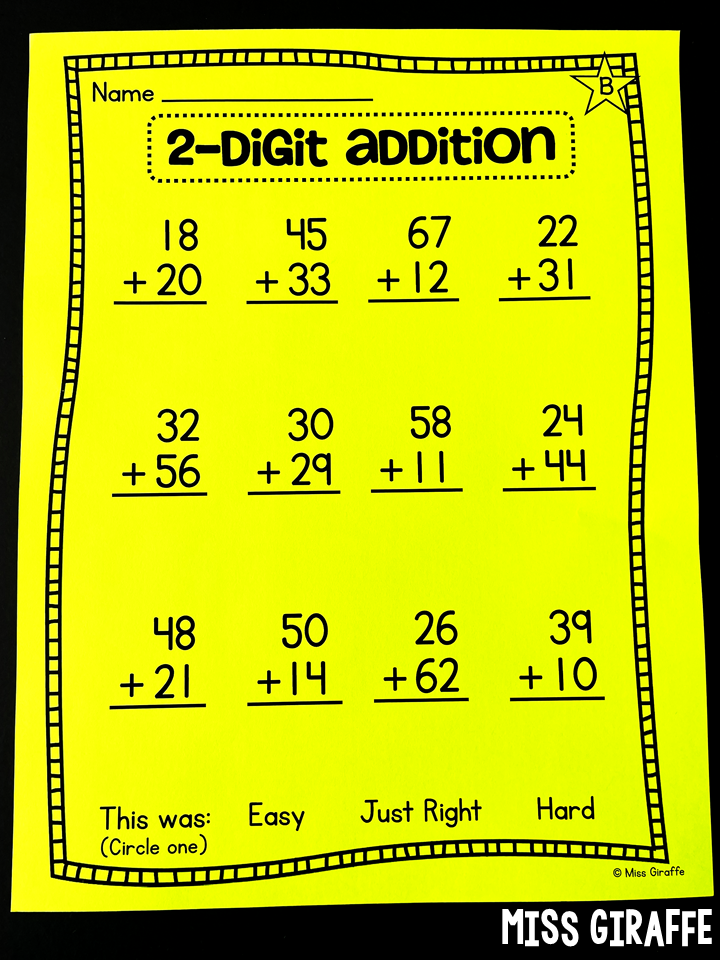
2 Digit Addition Worksheets that are easy and fun printable practice pages for math

An awesome trick is to teach them to point out their pointing finger. Place it on top of the 2 numbers in the tens place and simply solve the addition problem in the ones place. For example, in this yellow worksheet, they'd use their finger to cover 1 + 2 so all they see is 8 + 0. How easy is 8 + 0?! Then have them cover 8+0 while they can only see and solve 1 + 2. SO easy!! They'll be amazed at how they added 2 big numbers. :) :) So 18 + 20 is actually just 8+0 and 1+2, which they already know how to do. This is a HUGE confidence builder to introduce it this way!


2 Digit Addition and Subtraction Without Regrouping Using Place Value

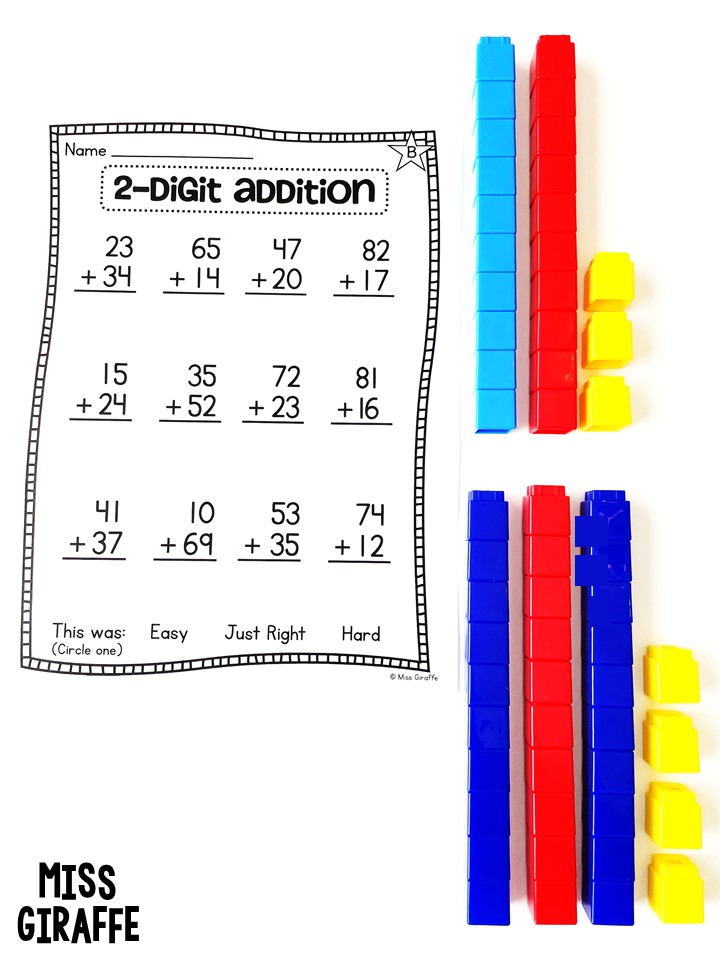
I highly recommend using cubes as place value blocks to show them what 2 digit addition and subtraction without regrouping is actually doing.

2 Digit Addition using Place Value blocks to represent the numbers to help students add. Such a great math lesson for 1st or 2nd grade. Also helps prepare kids for regrouping once they're ready for that!


This will also come waaaay in handy once you DO start regrouping, because they can physically move cubes to regroup! Such an amazing lesson and visual representation of what regrouping is. :)


As you can see in the picture above, have them first look at the 2 numbers they are adding. 23 and 34. So they'd build 23 with cubes, in the form of place value blocks. Then, build 34 with cubes. Each ten is a stack of 10 cubes, as if they were place value blocks. This shows them the 2 numbers they want to put together. Then, they literally put them together by putting the tens with the tens and the ones with the ones. Count it up & they have the answer to the addition problem! :)


You could also use actual place value blocks since they're smaller & the "tens" are already made, but I highly recommend having them build "tens" out of 10 cubes themselves. It's great place value practice AND will be really helpful if you also use cubes for teaching regrouping whereas you can't separate/add to the "tens" blocks when they're actual place value blocks.


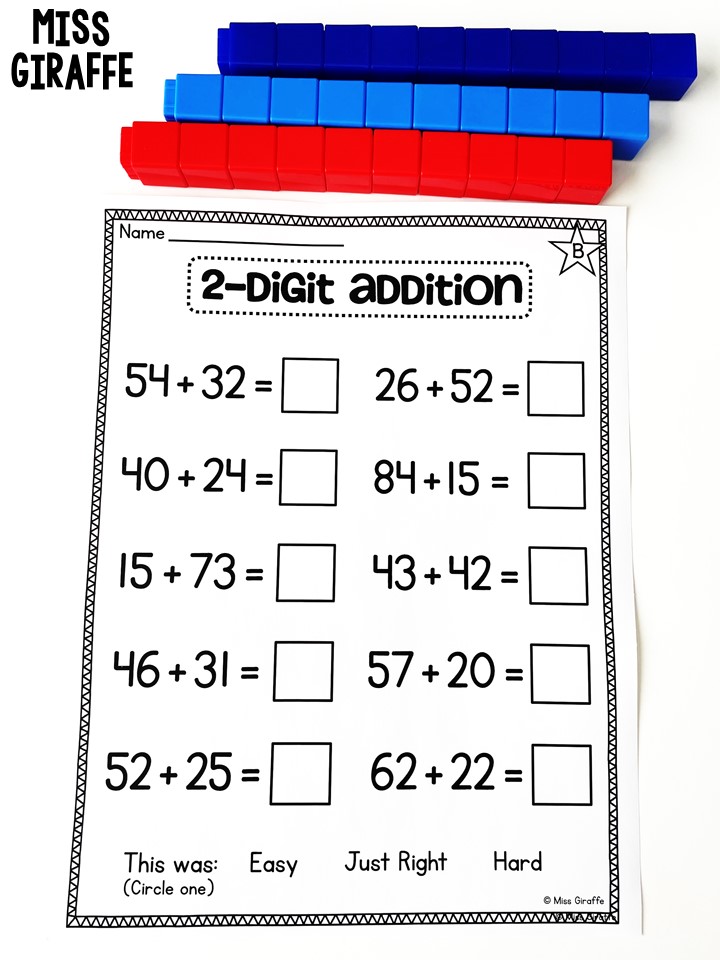
For those of you who use my math units, you may notice that's a Level B worksheet! :) All my math units have 3 levels of worksheets for each concept included in the unit so you can differentiate easily. B is where you'd expect a first grader to be. A is extra support. C is for a challenge.

Two Digit Addition without Regrouping Strategy using Place Value blocks to build the problems. Such a fun and visual way to learn adding for young kids!


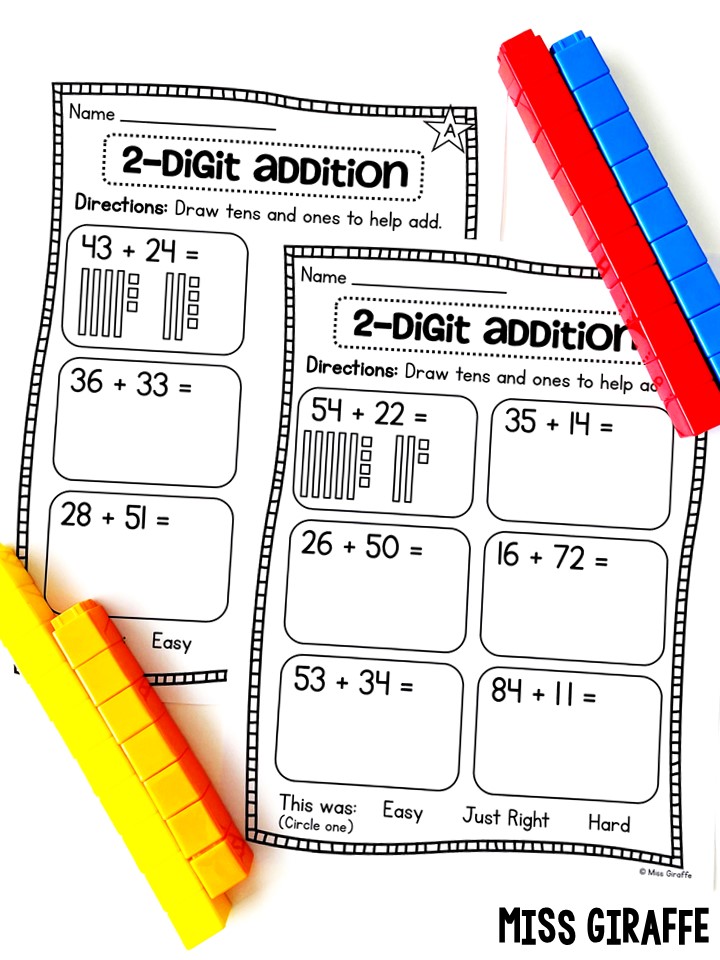
If you have students who need a little bit of support, you can also teach them that they can DRAW place value blocks any time they need support. This is great practice for everyone and a GREAT strategy to teach all of your students for how to check their work, especially if they have to take any end of the year tests! 


You can also use this same strategy for subtraction!

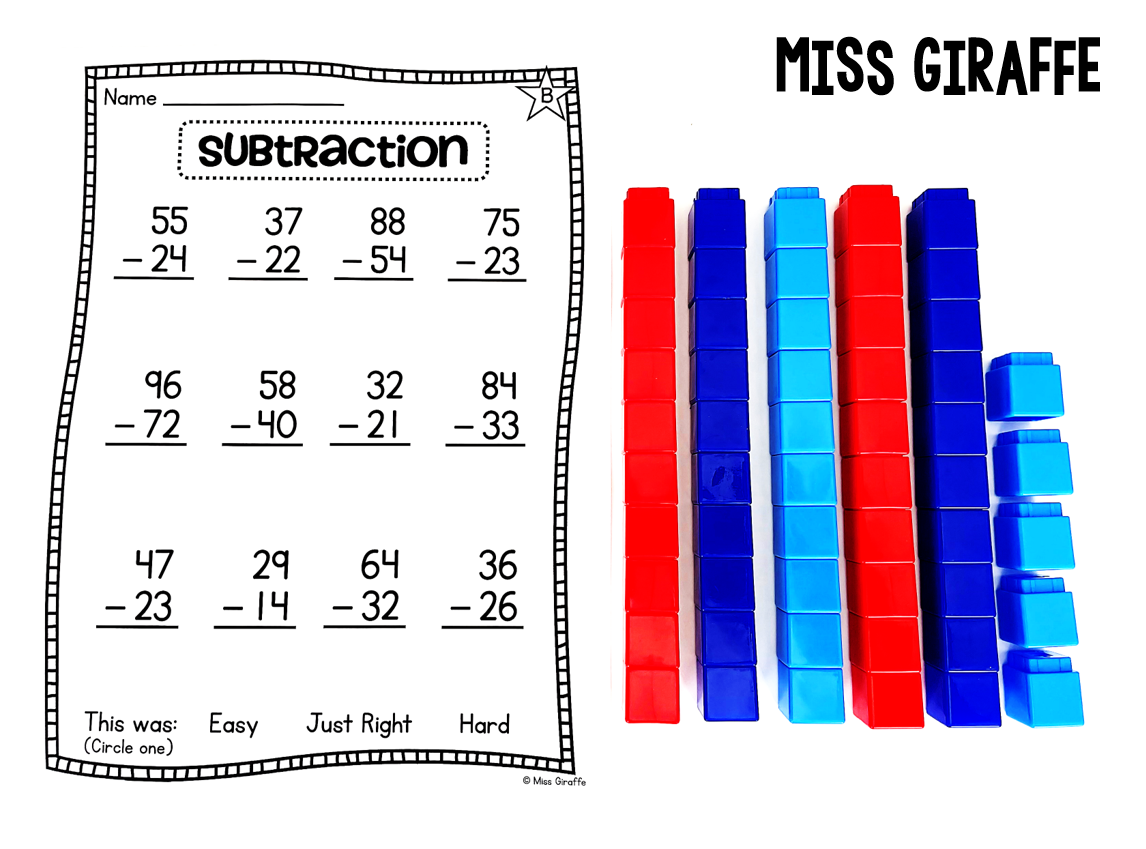
2 Digit Subtraction without Regrouping Strategy for First Grade Math Practice Using Cubes as Place Value blocks

Have them build the first number. Here, it's 55 and, as you can see, 55 is built on the side of the worksheet in cubes. I recommend NOT connecting the cubes for ones by the way. Have them show them as "ones" like this, where they are separate entities. Especially for subtraction problems. 


After they've built 55, they look at what number is being subtracted. 24. So they would simply remove 4 ones and 2 tens from this in order to get their answer! :) Such an awesome way to show exactly what is happening when they're doing 2 digit subtraction.


Again, GREAT place value practice! If they need more work on place value, 2 digit addition and subtraction will be difficult, even without regrouping, so if that is the case, I recommend doing all of the activities from my big First Grade Place Value Math Unit to really solidify their knowledge of tens and ones. Play the games and do the activities over and over (don't worry, they're so fun!!) until they really get it down. 


You can also give them a worksheet that shows what to do. For support if needed, they can draw the tens and ones blocks and cross the ones out that they are subtracting. This is a great way to visually show them what they're doing and makes an awesome math small groups lesson! Again, great place value review and awesome for continuing to build their number sense. I love that this shows them what they're actually doing when subtracting.

2 Digit Subtraction Practice with Place Value using cubes as tens and ones blocks to represent the numbers in each math problem


Fun Games and Centers for 2 Digit Addition and Subtraction without Regrouping

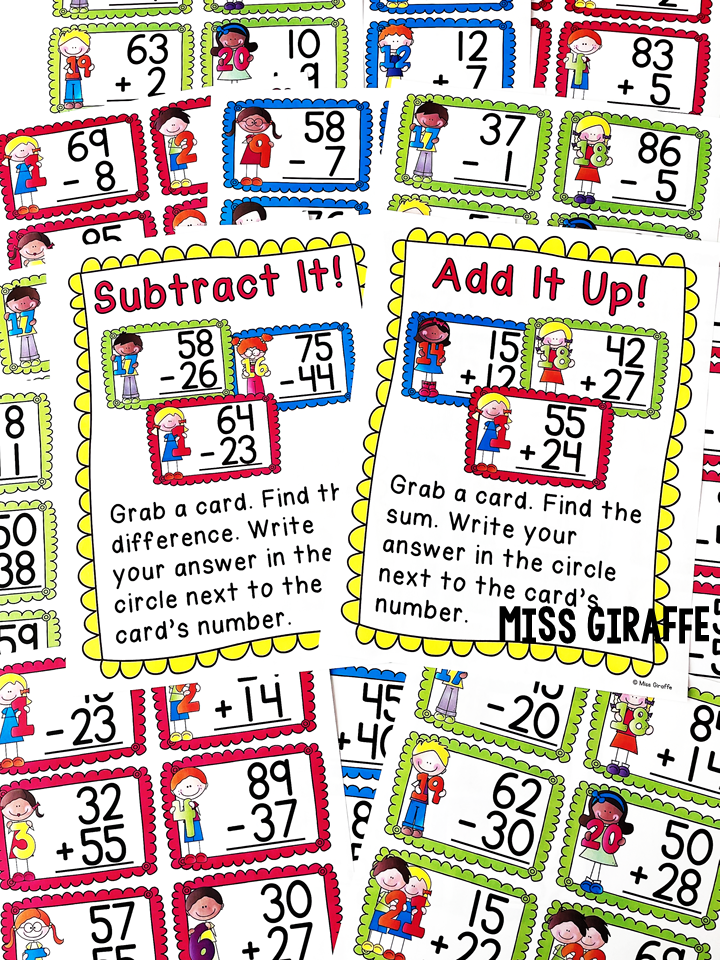
You can also let them have the support of cubes when doing math centers for 2 digit addition and subtraction! 

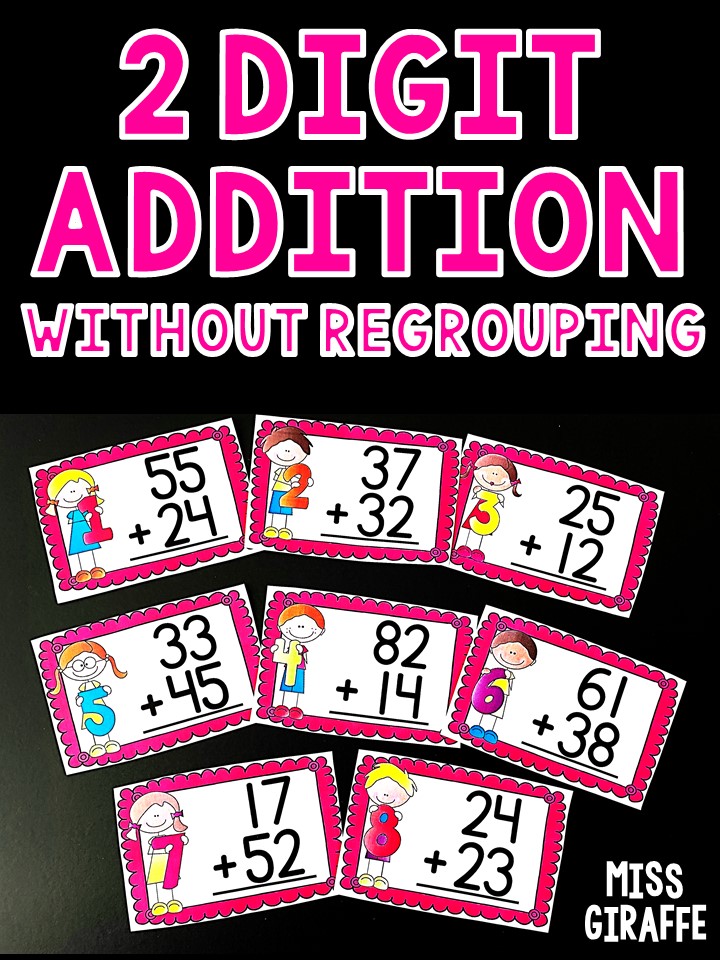
Two Digit Addition Game with Center Cards where kids build the math problem on the side with cubes to represent the numbers, such a fun and easy way for first grade (and 2nd) students to learn harder skills in a visual way!


Let's say they were doing a center game like this where they take a card, solve it, and write the answer on their recording sheet. You could absolutely let them have cubes to help them solve. It really helps build their confidence to be able to "check" their work and "see" that it is correct. Plus, it's so fun to play with cubes! :) Again, I do NOT recommend letting them connect them. Have "tens" be connected ahead of time and are NOT disconnected ever. And the ones are by themselves. Tell them to pretend like the tens are glued if you need to, haha! 


2 Digit Addition and Subtraction without Regrouping Centers Games and Activities


I have several sets of these to practice each 2 Digit Addition and Subtraction Without Regrouping skill by the way! I recommend putting the regular 2 digit addition in one little box like this. Then, the 2 digit + 1 digit cards in 1 box. The 2 digit - 1 digit in 1 box. Then, the 2 digit subtraction cards where both numbers are 2 digits in 1 box. The multiples of 10 in 1 box. The 10 more and 10 less in 1 box. And so on! This makes SO many different centers that you can pull out and put away super easily! 

2 Digit Addition without Regrouping Game

My favorite thing about that is they will know what to do each time, but it's for a slightly different and new skill! Let's say you use the 10 more and 10 less version of these cards and they do an entire center for that. Well, when you later teach multiples of 10 (30+50) and use the exact same center format (cards look the same, recording sheet looks the same), they'll know exactly what to do and can focus only on learning the brand new skill! :) This is something I constantly talk about for my Phonics No Prep Packs for each phonics sound. Each sound has the SAME activities so, every week, you may be introducing a new sound but your kids already know how to do all of the activities so they can focus only on learning the new phonics skill and not spend time/mental effort figuring out HOW to do it. Love love love that. AND you don't have to give directions. How amazing does that sound?!?!? So, whenever possible, consistent activities are AWESOME. Especially in 1st grade, 2nd grade, and kindergarten! 


I also love theme centers! How cute are these little monkeys and their bananas? You match the bananas with the addition problem that matches the sum on the monkey! Then, they write the problems under each monkey on their recording sheet.

2 Digit Addition Monkeys Game


As you can kind of see in this picture (on the left), I put a student friendly directions sheet with each center so you can set it out at the center. This allows the center to be more independent and reminds kids what to do. It also tells any adult who walks in your room what the students are working on - if they're coming in to help, for example. There is also a teacher directions version of the directions page for each center. This helps explain how to play the center and sometimes fun tips for more ways to play and how to differentiate when possible!


Keeping up with the zoo animals theme, there is a subtraction version with elephants and peanuts!

2 Digit Subtraction Math Game for First Grade or 2nd where kids sort problems under the correct elephant to solve! So fun and easy for math centers or for working at home with your child on their facts!

For both of these centers, the kids are doing SO. MUCH. MATH. to sort the foods under the animals but probably won't realize it because it's so cute and fun. 


Both of these also have the problems in a horizontal way so that makes it a little harder! I think kids should learn how to solve vertical first. They can learn how to line the numbers up to easily solve. THEN, once they feel confident with that, introduce horizontal.


I recommend letting them use a piece of paper to rewrite the horizontal problems as vertical. Teaching them to line the two 2 digit numbers up is SUCH a great skill to teach them! They can use an extra piece of blank paper to convert them.

Horizontal 2 digit addition math problems worksheet for early elementary students

For example, if you gave them a worksheet like this, they may think it looks hard. Show them how to change 26 + 62 to having them on top of each other on a new piece of paper (or on the back of their worksheet) to make it easier to solve. Vertical will make it 6+2 and 2+6. Way easier! 

2 Digit Addition Worksheets


You can also have them bring out the cubes again! Anything they need to feel successful, I recommend! But I do definitely think it's important to teach them how to rewrite horizontal math problems into vertical ones. 


2 Digit Addition and Subtraction Without Regrouping Mixed Review Practice

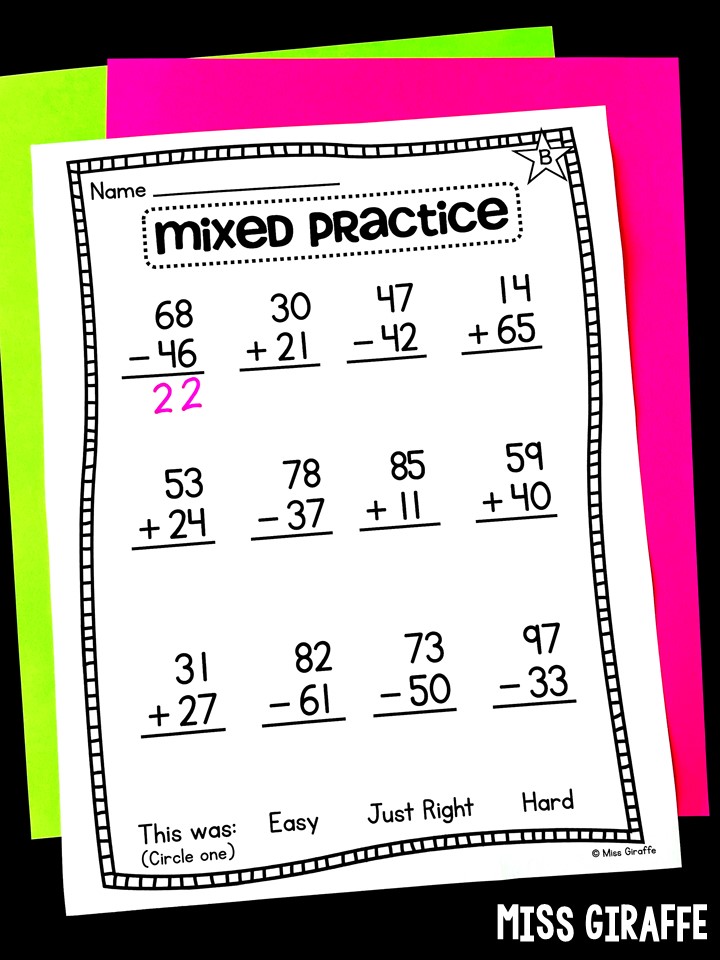
I also think it is super important to have a lot of mixed practice for addition and subtraction. That's why there is literally an entire concept inside my 2 digit addition and subtraction math unit for it. It's really important that they look at the symbol, so they know what to do, so I like to provide a lot of worksheets and activities where they have to look to see if they're adding or subtracting.

Addition and Subtraction Mixed Practice Worksheets

This would be an easy time to bring out the cubes again and ask them - are you combining the 2 sets of cubes or taking away cubes? 

Addition and Subtraction Math Worksheets with No Regrouping

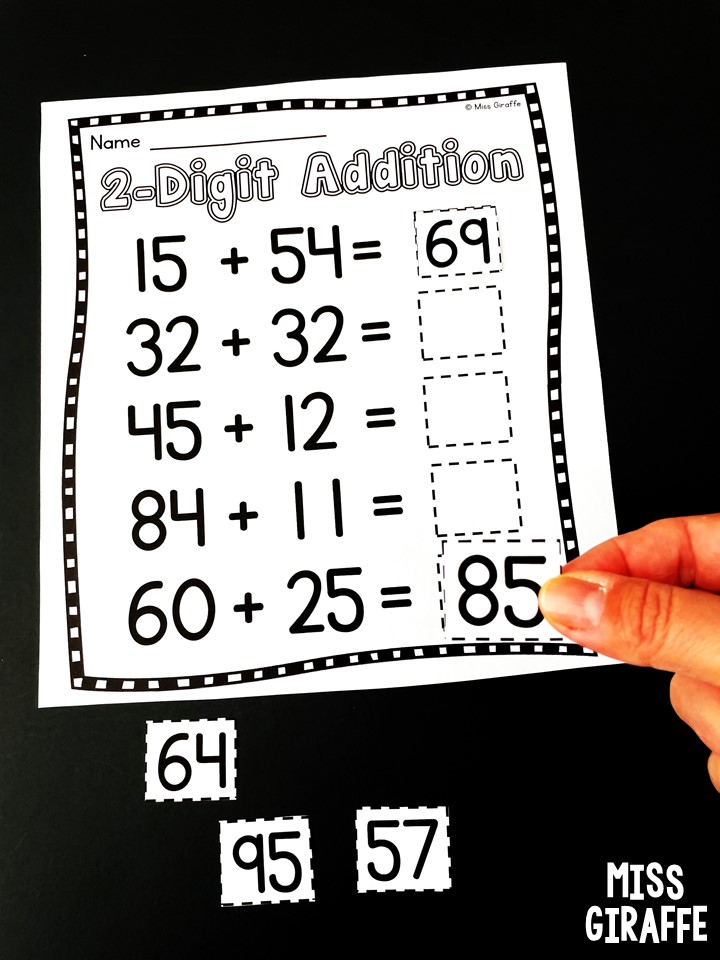
You can also do mixed practice by simply giving them addition pages sometimes and subtraction pages sometimes. It wouldn't be a math post from me without a little cutting and gluing! :)


2 Digit Addition Worksheet Fun Practice First Grade Math

I genuinely think having to glue answers down makes kids think harder about their answers. It's hard to un-glue paper so they work more thoughtfully, I feel like. 


2 Digit Subtraction Worksheets with no regrouping

Plus it's fun! I love that they can move around their answers. I recommend teaching them to cut out all the answers first, place them (so if one doesn't make sense, they know to check all of them to figure out which one they did incorrectly), THEN glue. This teaches them so many great skills! 


I like to have a page like this for every concept so it's a center your students are used to doing! For example, if you're learning adding and subtracting 2 digit and 1 digit numbers, you'd also do a page like this for that.  

Subtracting 1 digit numbers from 2 digit numbers worksheets and activities

It will look familiar to them. Like a page they've already done and were successful with. So a new, "hard" topic doesn't seem so intimidating to them. :) 


Another quick tip I have is to print "boring" worksheets on colorful paper! 2 Digit Addition and Subtraction Without Regrouping is kind of a bland concept compared to the other super fun ones kids learn in K-2, but it is SO important. And one they need a ton of repetition and practice with in order to master. One super easy way to make it a little more fun is to print the worksheets on color paper!

Colorful 2 digit addition and subtraction worksheets

You could tell them they earn a specific color. For example, if they finish a regular worksheet on white paper, they get to do a COLOR one. Ooooh! They'll be EXCITED to finish worksheets! :) It really is great practice. You could also put these in sheet protectors so you don't waste a lot of color paper. Then, they get to use dry erase markers and will love it even more! There are so many ways to make a worksheet fun. Kids LOVE using dry erase markers on sheet protectors so you could definitely do that. AND then you'd also get to reuse these so you're printing and preparing less!


All of these activities I've shown here for 2 Digit Addition and Subtraction Without Regrouping (and so much more) are included in my First Grade Math Unit 13 on TpT!  

First Grade Math Unit 2 Digit Addition and Subtraction Activities Games Worksheets and Fun Centers

If you're familiar with my math units, they are PACKED with fun, differentiated worksheets for each concept in 3 levels (A, B, and C) and centers for each concept too! Also cut and paste worksheets AND an assessment at the end of the unit to review all the concepts. I always include 3 versions of the assessment so you can do one before, during, and after. You can also save them for end of the semester/quarter/period/year assessments if you're required to do that for report cards! :)


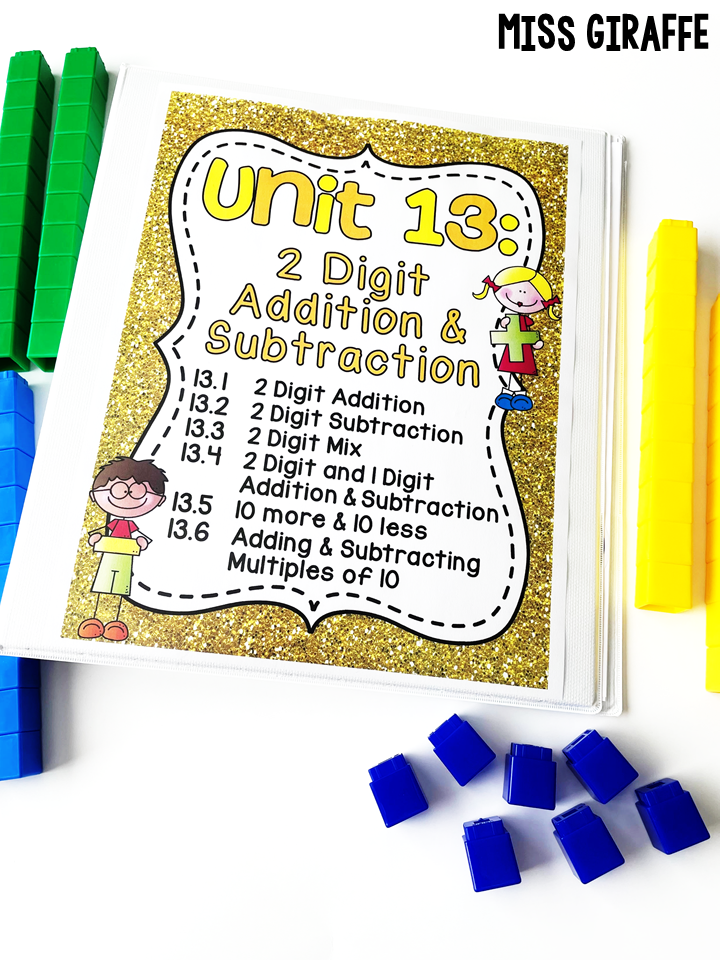
You can always look at the cover of my math units to see what's included. The First Grade Math Unit 13 (which could also be used in 2nd grade) has the following concepts:

- 2 Digit Addition

- 2 Digit Subtraction

- 2 Digit Mix

- 2 Digit and 1 Digit Addition and Subtraction

- 10 more and 10 less

- Adding and Subtracting Multiples of 10


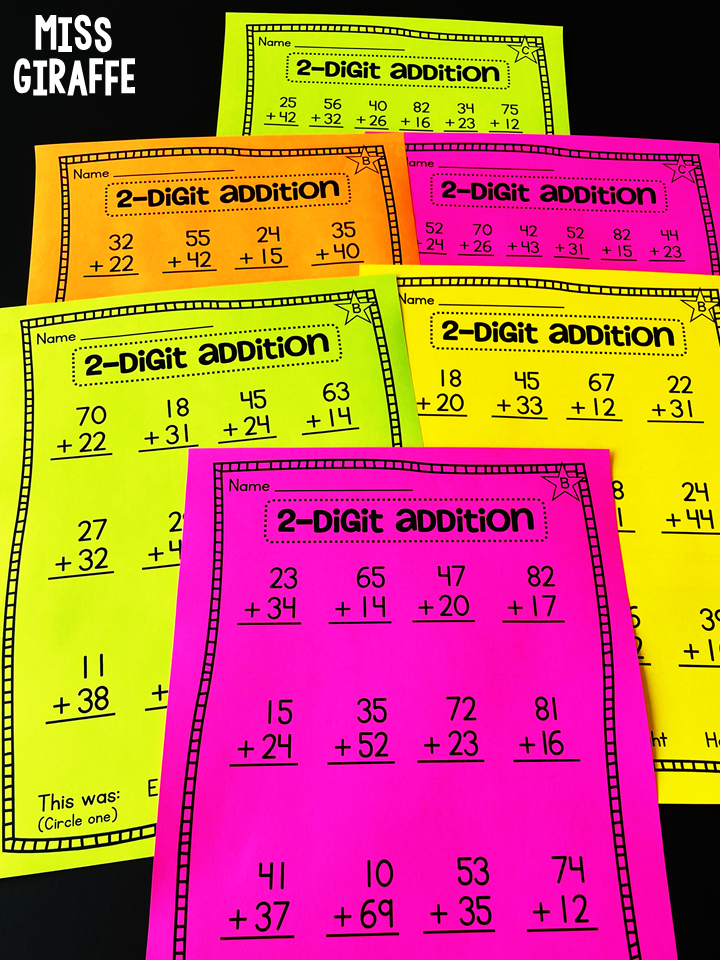
This one is absolutely packed with 2 Digit Addition and Subtraction Without Regrouping Worksheets and Activities - here are just a few of the practice pages:

2 Digit Addition and Subtraction Without Regrouping Worksheets

I highly recommend using worksheets for practice and teaching. You can see the level of any worksheets in the top right corner inside of a star (see the A in the star on the page on top here?) so you can quickly grab what each student/child needs. 


If a worksheet is taking them a long time - or they seem frustrated - go down a level. A is easiest, B is where most of your students will be, and C is for a challenge. 


If you have students that finish their work quickly who love doing classwork and always ask for more or what's next, having the C level pages for each worksheet that you do is sooo nice to have!

Challenge worksheet for 1st grade 2 digit addition with no regrouping practice

The wonderful thing about having worksheets in 3 levels is you can meet each student where they are at, then go to the next level when they're ready so everyone can get to the challenge level in a way that supports them along the way! :) I usually try to make the challenge level conceptually more challenging, where they have to think a little bit more, rather than simply more math problems, but for something so straightforward like 2 digit addition, sometimes it's simply more problems on the page. Which, again, for your kids who finish their work quickly but enjoy doing work, it's perfect for them!


Differentiated math worksheets for 2 digit addition

My goal with differentiating is always for the kids to be practicing the SAME skill, but at THEIR level. The level that challenges them a little, but not too much, not too little. :) 


I also try to make the pages look really similar too, so it's not obvious, they simply got a different one. All of these look fun and are 2 different levels, for example!

Adding 2 Digit Numbers Worksheets and Activities

Anyway! Then do the fun centers and games for review and more practice! I love math games and centers for each concept because they don't realize how much practice they're actually doing. Especially centers you can reuse over and over. You can also always bring them back out later in the year to review them again.  


Thank you so much for reading! I hope this gave you some fun new ideas for teaching 2 Digit Addition and Subtraction Without Regrouping. If you'd like to see another post for how to use these same strategies to teach regrouping, let me know! I'd also love to hear from you on whatever platform you love the most! I am on almost all of them! :) 


Again, you can get ALL of these activities that I showed in

First Grade Math Unit 13: 2 Digit Addition and Subtraction Without Regrouping

(which you could also use in 2nd grade or in any grade where you're trying to support your students with 2 digit addition and subtraction, including the concepts within that such as 10 more and 10 less, 2 digit and 1 digit addition and subtraction, and multiples of 10)


Definitely click this to follow me on TpT though! You don't want to miss when I post brand new stuff because it's often at a deep discount for being the first to see/get it! :)


I also have FREE math and phonics groups on FB for teaching first grade (K and 2nd grade teachers are welcome too! I think you'd still get a ton of fun ideas!) so join those if you want a lot more tips and also exclusive free stuff for group members! I love chatting with you all in those so we'd love for you to join us! You can also simply follow my FB page! I absolutely love sharing tips to make your teaching life easier, more fun, and more organized. So if you love that too - and are always looking for fun new phonics, math, writing, and classroom management tips - then I'd love to share mine with you!


If you want to "pin" this post to read later, you can pin ANY of the pictures from this post onto your boards! :) I also took a second to make these 2 pins for you so it says what the post is about, if you prefer that! Hopefully they'll help you quickly remember this post! 

2 Digit Addition Without Regrouping Fun Ideas Activities Games Worksheets and Centers

and

2 Digit Addition with Place Value Fun Ideas Activities Games Worksheets and Centers

I also have this page that has an organized list of my blog posts, so you can use it to quickly find any math, phonics, writing, or classroom management topic you need! :) 


I hope that's helpful!! Thank you again for stopping by my blog! I so appreciate you taking the time to read my teaching ideas and I hope you enjoyed them!

Fun R Controlled Vowels Activities and Games

 Need some Fun R Controlled Vowels Activities and Games? Here are my favorites!


First, what are R controlled vowels?

R controlled vowels, often called Bossy R sounds, are OR, AR, ER, IR, and UR. 


These sounds are often introduced in first grade. OR and AR are usually taught first, with a week dedicated to each (an entire week of AR and an entire week of OR). Some people teach them together. If you have enough time in your schedule to dedicate a week to each, that's what I personally recommend! :)


After OR and AR, ER IR and UR are typically taught together in the same week since they make the same sound. 

ER IR UR Bossy R Sounds Activities and Games that are so fun for teaching R controlled vowels!

P.S. There are 3 letter Bossy R sounds as well (AIR ARE EAR making the "air" sound, for example), but from the conversations I have had with teachers all around the country and world, they are usually taught in 2nd grade or later on in the first grade year. :) So this post is going to focus only on the five 2 letter R Controlled Vowels sounds. 


How to Teach R Controlled Vowels: Start with AR Activities!

I recommend starting with AR! It's an easy sound. It's a fun sound (farm! bark! car!) to learn for a week. You can also start with OR, but if your curriculum gives you a choice, I say do AR first.

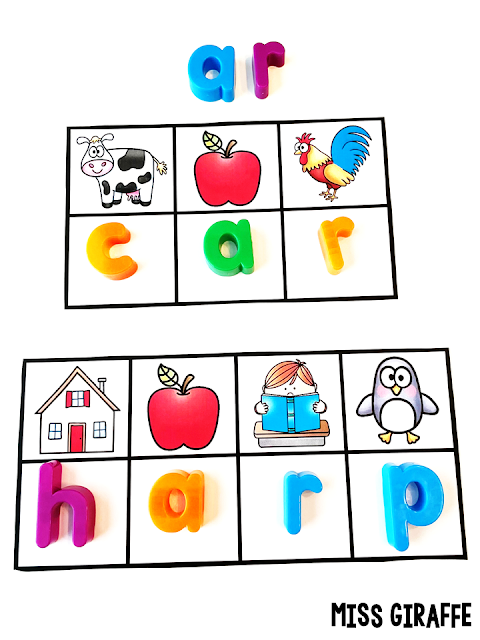
AR sound phonics activities that are so fun and engaging for kids to learn bossy R controlled vowels! Secret Words are my favorite center for first grade, 2nd, or kindergarten reading!

This is one of my favorite ways to recommend a new phonics sounds. Secret Words!!


P.S. I have shown these for many different phonics sounds and also sight words on this blog for years, but I haven't shown my R Controlled Vowels Activities and Games version of them so here they are! :) I have them for over 330 sight words and also soo many different phonics sounds so, if you love these, you can use them as a center game all year! I do have a Secret Words BUNDLE of them on TpT if you want them for the entire year! The bundle has over 1,000 5 star reviews on TpT and the Sight Words set that is included in that bundle has over 3,500 5 star reviews so I am pretty confident that you'll love them too if you try them! :)

AR R Controlled Vowel Game to learn R Controlled Vowels!

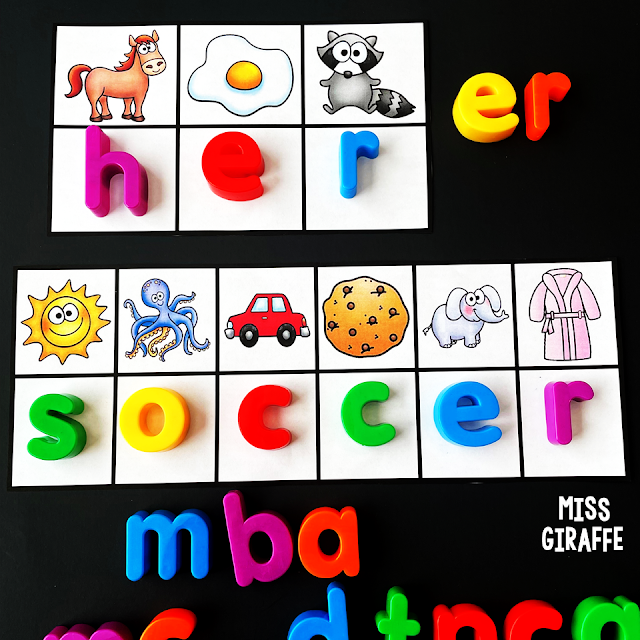
The way you use them is you cut them out like this to make each word into its own card. Then, kids look at each picture and figure out its beginning sound. 


They place a letter (you can use magnets, letters written on water bottle caps, they can write it with a dry erase marker if you laminate them) under the picture. They keep going until they've done it for all pictures. This reveals a Secret Word! 


Sooo fun and kids get to feel like little detectives while practicing so many skills in one. 


They're learning the new phonics sound since all the words will be with that sound for that set AND reviewing beginning sounds. They will be SO motivated to read the words with your new phonics sound because they're a mystery they're trying to solve! For first grade, I recommend printing 8-10 words for a center and have all 8-10 be your new phonics sound for the week. Such a fun way to discover and explore with your new phonics sound and read words with it in a fun way!


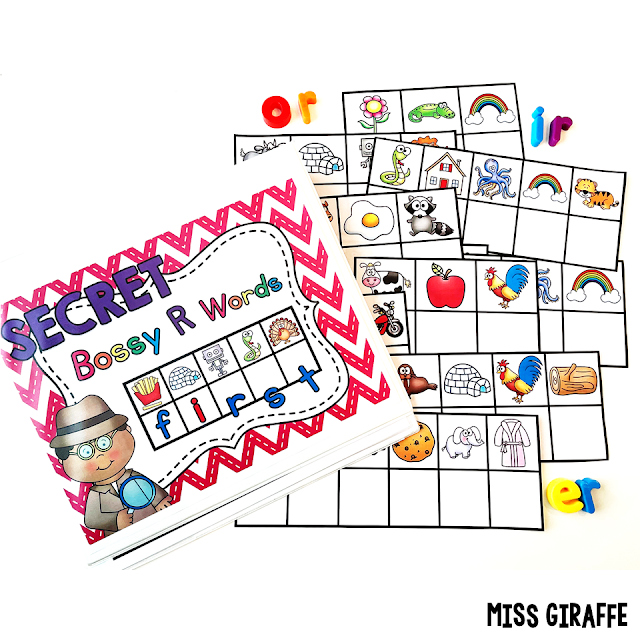
Another fun thing you can do is put the full pages (don't cut them out except to cut the word off on the left) into a sheet protector in a binder! Here's a picture of both ways:

Secret Words Bossy R Activities - Put them in a binder to make it a game kids can flip and build to grow their phonics skills!


Kids open the binder and each page will have 2 words on it (the way they print! :) woo!) for kids to build to figure out each Secret Word! 

Binder Secret Words AR Sound - check out these fun R Controlled Vowels Activities and Games!

It's a fun way to practice. They grab a binder with sets for that phonics sound and can do it independently, with a partner, or in a small group.

Secret Words Bossy R Sounds


After AR, I recommend working on the OR Sound!

From corn to fork, there are tons of OR words to practice!

OR Sound Phonics Activities for R Controlled Vowels Activities and Games

The wonderful thing about using the same type of center every week - Secret Words, for example! - is that the kids already know what to do. They only have to concentrate on what they're learning, not how to do the activity. I talk about the importance of this a lot, especially when discussing my yearlong centers or Phonics No Prep Packs. The activities are consistent, so kids only have to worry about learning the new sound! :)


I recommend upping the difficulty of words slightly with OR. For example, in the example above this, SC is an S blend and SH is a digraph at the beginning of those words. You can use the easier cards, but I recommend trying to stretch them if they're ready! 


Again, this activity is SO fun that they will be so motivated to figure out the words. They will be trying their best to blend the words and read those tricky R Controlled Vowels!


Last are the R Controlled Vowels Sounds ER, IR, and UR!

I recommend teaching these at the same time. Preferably spending an entire week on the 3 sounds. If you teach one sound a week, you'd teach all of these in the same week. They make the same sound - ER in fern, IR in bird, UR in surf.

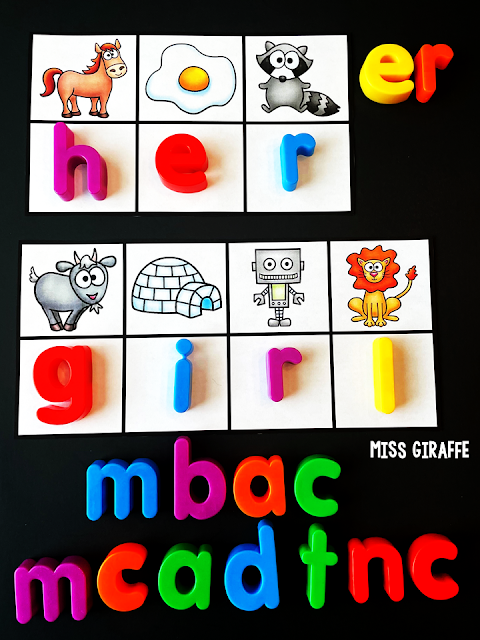
Bossy R ER IR UR phonics sounds activities

The ER phonics sound can be a little bit more difficult since most of the words you will practice are 2 syllables, but they learn the pattern pretty quickly since it is part of so many words that they use constantly - including teacher! :)


For example, soccer is a pretty long word but I think they can do it! It's a "big" word but it's very easy to blend if they know the ER sound.

R Controlled Vowels Activities and Games

I love using really cute, engaging pictures for teaching phonics sounds. The brightness really does make it feel more like a game. The more you can make reading fun, the better! :) 


Anyway, that was a little peek inside the Bossy R version of my Secret Words centers! If you want them for the entire year (and also sight words!), I do recommend getting the Secret Words BUNDLE instead. 


You can see some of the cards from more phonics sounds for cards like these in my various "Literacy" posts for various phonics sounds - simply click on the sound you want to see on this sound and have fun doing a little scrolling through pictures of fun activities you can do for that sound! :)


Thank you so much for reading! I am so excited to bring you tips and fun ideas and I hope showing you this set of fun R controlled vowels activities and games using the Secret Word centers strategy helped with that! Please browse around - I have tons of phonics and math posts for early elementary! I love sharing tips and ideas - I hope you love using them if you use any of them!